This Halloween, I'm inspired by one of my favorite Walt Disney World attractions, the Haunted Mansion.
Almost everyone has been through a homemade haunted house. You park on gravel and stand in a loose clump near the entrance until someone eventually yells that the next group can go in.
Now think about the Haunted Mansion at Walt Disney World, where the approach is engineered, and the experience is completely different. This Halloween, I keep coming back to that attraction as one of the best examples of an exceptional wait I know, and as a benchmark any organization can learn from. Walk it with me for a minute.
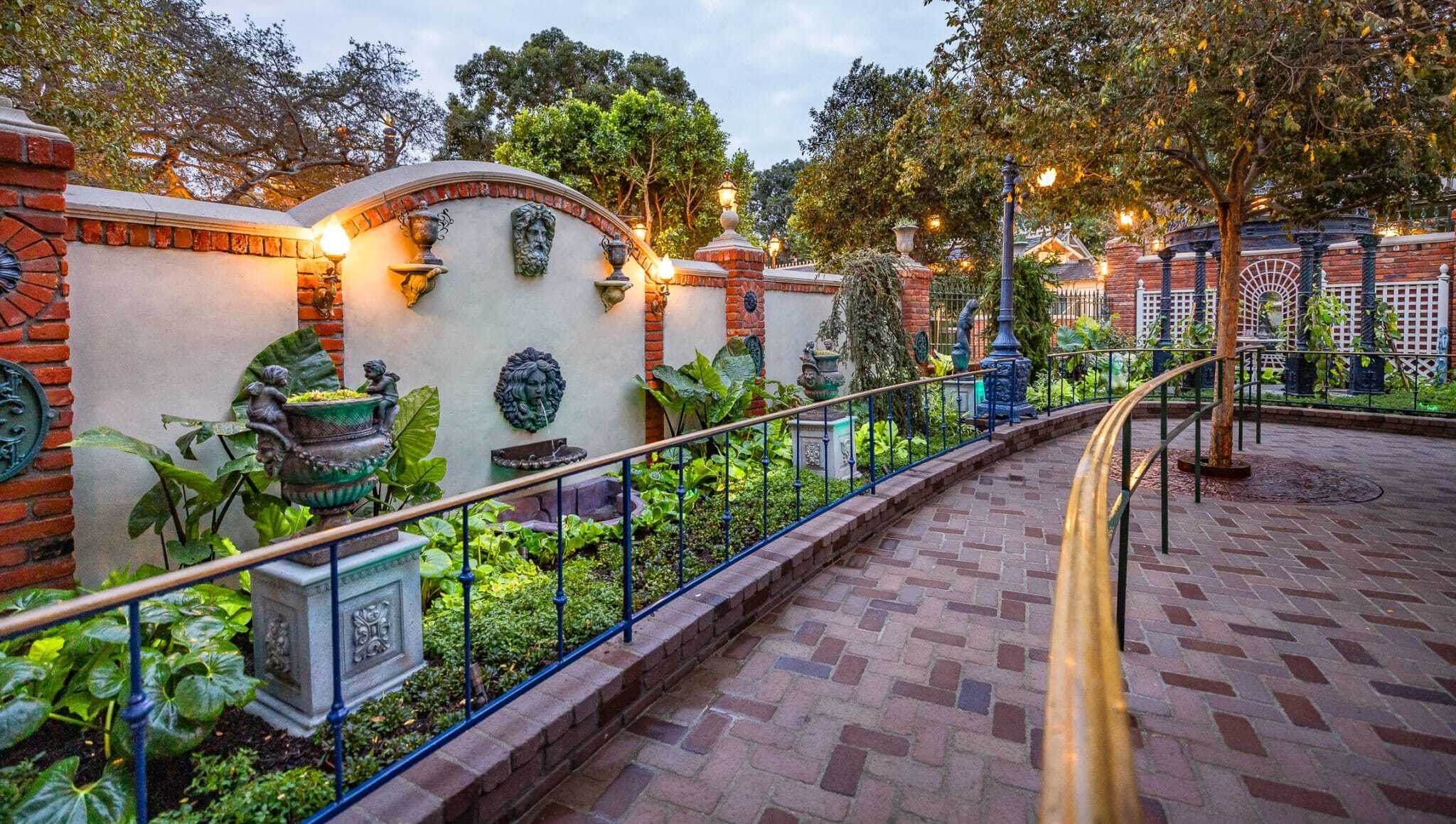
It begins in the yard. Guests are routed past a wrought iron gate and along a path lined with stanchions. Those stanchions are doing crowd control, but they look like the house's exterior. Organ music drifts down from overhead speakers, and the tombstones along the path carry epitaphs written to be read out loud, which is why you'll see families stopping to laugh at them and photograph what is, still technically, a line.
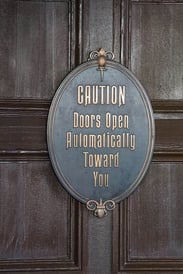 A little further along, a sign on the door warns that the door swings toward you. It's a straightforward safety notice, but it's set in the attraction's typeface and written in the attraction's voice, so it presents as one more artifact of the house.
At the threshold, a cast member greets guests in costume and in character as a concierge host. Everything guests need from that point forward — where to stand, how far to move in, which way to face — comes from that host as part of the story and show.
Then there's the chamber, where the lights change, the room does something rooms aren't supposed to do, and a voice explains the rules of the world guests have just entered. By the time they reach the loading area, they've been informed, paced, entertained, and told exactly what to expect.
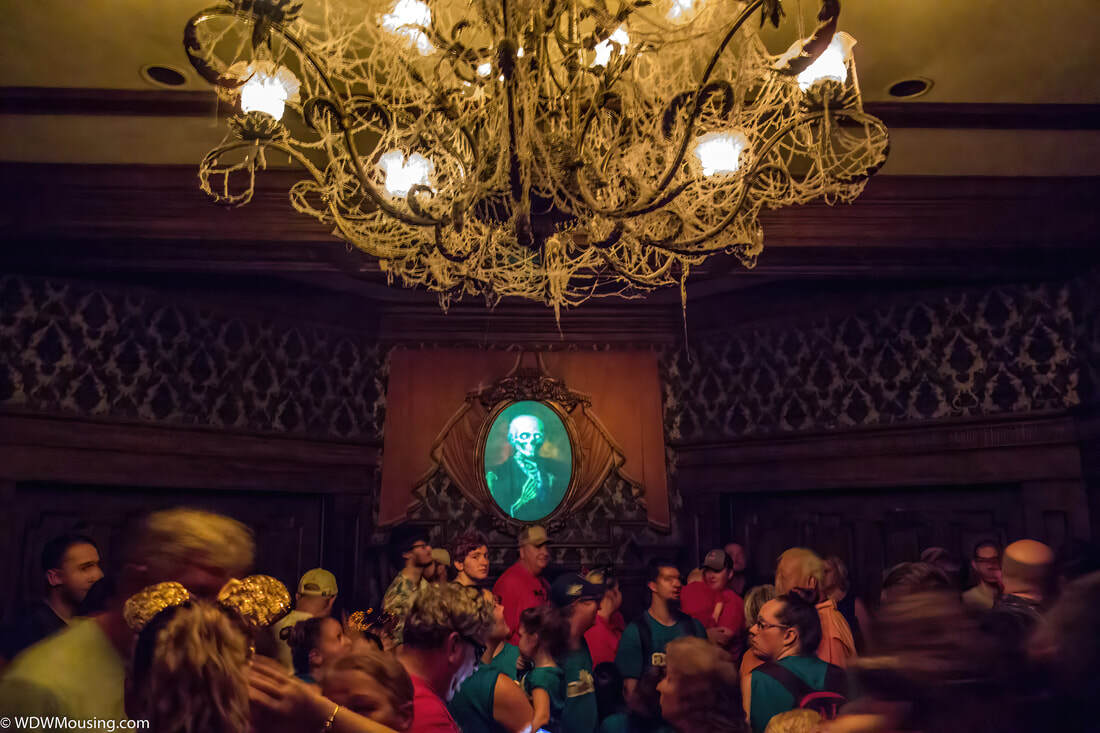
The ride hasn't even begun, and every one of those minutes is still the show. Disney calls this the "pre-show."
I've written before about Line by Design, the idea that waiting is part of the guest experience, and about how to find your organization's "front door," the moment a customer begins experiencing you.
Finding it is diagnostic work. Designing the pre-show is what you build once you have, and it covers everything between that first moment and the point of service.
Who's Writing Your Pre-Show?
Think again about that walk up to the Mansion's entrance, and you'll notice that every element is doing two jobs at once. The signage, the host's script, the audio—everything in that sequence is both operational and experiential.
Your organization has a similar walk, whether it's the parking lot and the elevator bank, the hallway to the permit counter, or the eleven minutes customers spend on hold. People are already forming expectations in those spaces.
What most organizations skip is what Disney does so well: They've assigned the arrival and wait to a team held accountable for considering these moments as part of the experience.
How to Design Your Own Pre-Show
If you haven't already, determine where your story starts. Find the first moment someone encounters you (your "front door") and treat that as the opening scene. At the Mansion, it's the gate. For most organizations, it happens earlier than you'd think, and you can't design an arrival experience until you've defined the actual arrival.
Then build your "show" around it. Ask yourself:
-
What are we teaching them? Every sign, sound, and empty hallway is tailor-made for instruction. Stand at your entrance and ask what a stranger would learn about your competence, your warmth, and your respect for their time in 60 seconds.
-
Who is the host? Someone should be the first human voice, not a monitor or a kiosk. Decide who owns that role and prepare the person the way you'd prepare anyone with a speaking part. For example, you might start with writing answers to the five questions they'll field most often.
-
Does our functional communication stay in character? Hold messages, wayfinding, and safety notices often get written without much thought, which is how a genuinely warm organization ends up sounding robotic. That messaging can be perfectly clear and still sound like you.
You don't need a haunted house budget to do any of this, but you do need a team willing to focus on it.
Every organization is running a pre-show right now, whether anyone wrote it or not. Take that walk yourself this month and see which version your guests are getting: the one you engineered, or the one with the gravel lot and the yelling employee.
If you're ready to build your Line by Design, get in touch.
Want to be more EFFECTIVE? Follow us on the journey:
- Follow us on TWITTER: @DonnellyEffect
- Follow us on LINKEDIN: Donnelly Effect & Mike Donnelly
- SPARKS! Blog: Subscribe on the upper right hand side of this page =)
Mike Donnelly, CEO of The Donnelly Group, is a recognized expert, keynote speaker, facilitator, and consultant in customer service and leadership development. Leveraging 20+ years of experience from The Walt Disney Company, he and his team help clients achieve high-performing service cultures and positive business results.